Key Takeaways
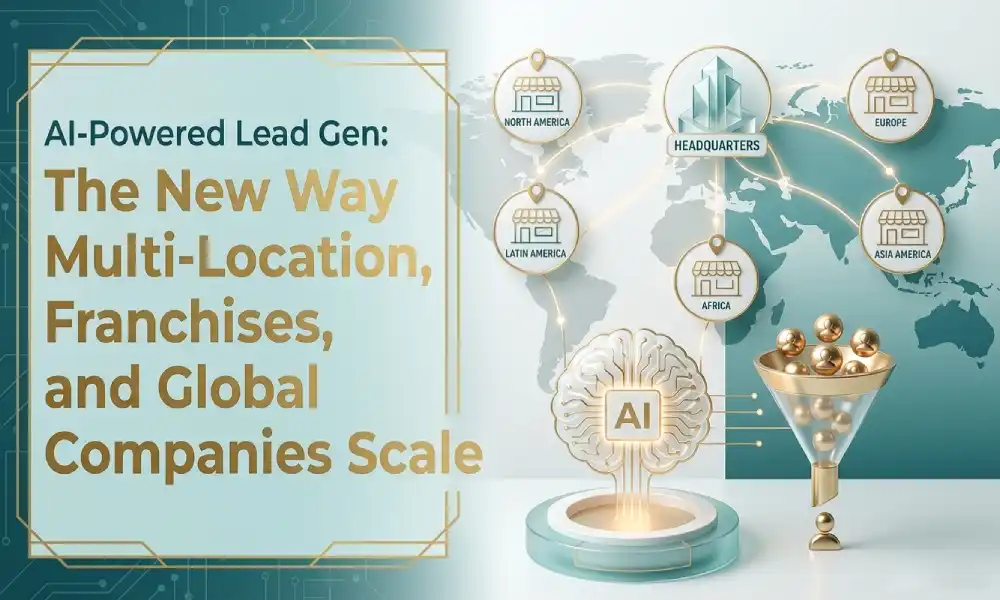
- AI-Powered Lead Generation Is Transforming Multi-Location BusinessesAI-powered lead generation is rapidly changing how franchises, multi-location brands, and global companies attract customers and scale revenue.
- Traditional lead generation systems struggle when businesses expand across dozens or hundreds of locations because managing campaigns manually becomes inefficient, inconsistent, and difficult to optimize.
- AI-Powered Lead Generation: How Multi-Location Brands Are Scaling Faster With Smarter SystemsModern AI-driven systems solve this challenge by connecting customer data, advertising platforms, local SEO, automation, and performance insights into one scalable strategy.
- Instead of running disconnected campaigns market by market, businesses can now use AI to improve lead quality, personalize messaging, and optimize performance across every location simultaneously.
- Companies using AI strategically are not simply generating more leads — they are generating higher-quality leads that convert into revenue faster.
- Why Traditional Lead Generation Fails at ScaleAs businesses expand into multiple cities, regions, or countries, traditional lead generation methods begin to break down.
AI-Powered Lead Generation Is Transforming Multi-Location Businesses
AI-powered lead generation is rapidly changing how franchises, multi-location brands, and global companies attract customers and scale revenue. Traditional lead generation systems struggle when businesses expand across dozens or hundreds of locations because managing campaigns manually becomes inefficient, inconsistent, and difficult to optimize.
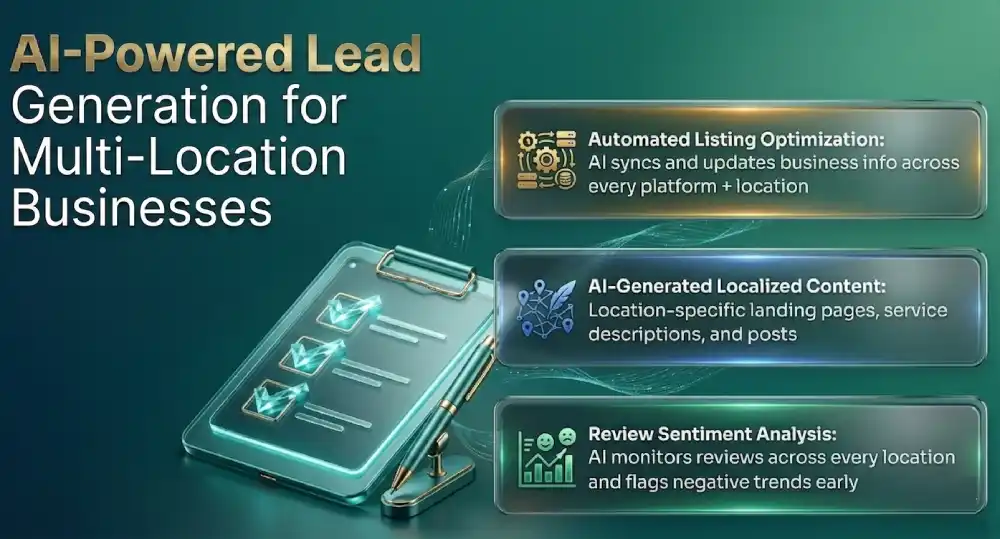
Modern AI-driven systems solve this challenge by connecting customer data, advertising platforms, local SEO, automation, and performance insights into one scalable strategy. Instead of running disconnected campaigns market by market, businesses can now use AI to improve lead quality, personalize messaging, and optimize performance across every location simultaneously.
Companies using AI strategically are not simply generating more leads — they are generating higher-quality leads that convert into revenue faster.
Why Traditional Lead Generation Fails at Scale
As businesses expand into multiple cities, regions, or countries, traditional lead generation methods begin to break down.
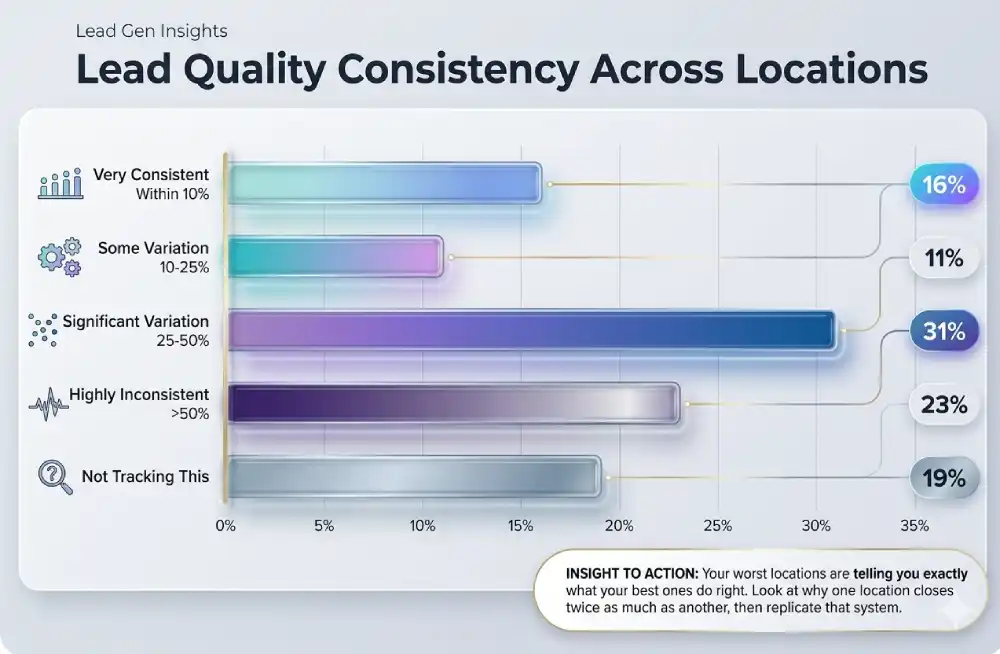
Fragmented Marketing Strategies
Different teams often manage different locations independently, resulting in inconsistent branding, messaging, and customer experiences. Without centralized oversight, businesses struggle to identify what strategies actually drive results.
One location may perform exceptionally well while another underperforms, but without connected systems, there is little visibility into why those differences exist.
Inconsistent Lead Quality
High lead volume does not always mean strong business growth. Some locations may generate many inquiries but few actual customers. Others may produce fewer leads that convert at a much higher rate.
Without tracking lead quality by location, businesses often optimize for volume instead of profitability.
Slow Manual Optimization
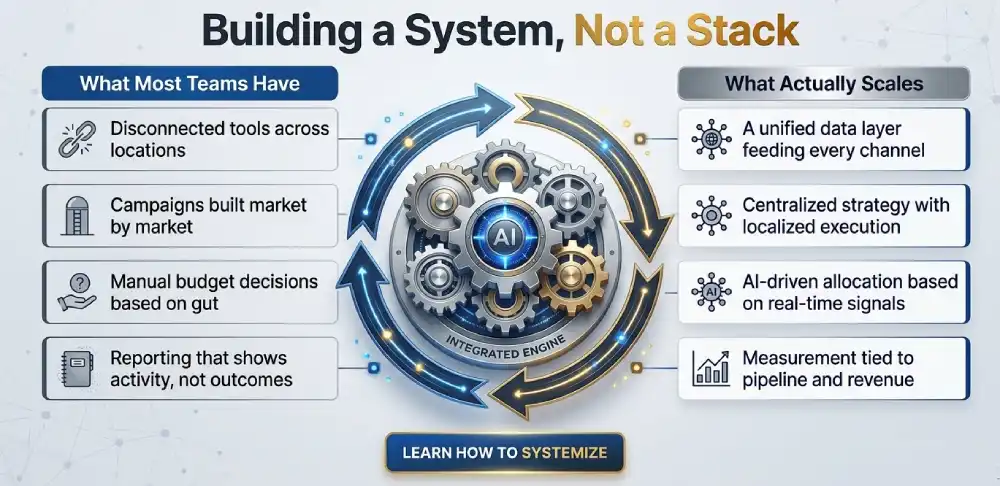
Many companies still adjust advertising budgets and campaign strategies manually every month or quarter. In rapidly changing markets, that approach is too slow.
Consumer behavior, local demand, and competition shift constantly. AI systems can respond in real time, while manual processes often react too late.
The AI-Powered Lead Generation Framework
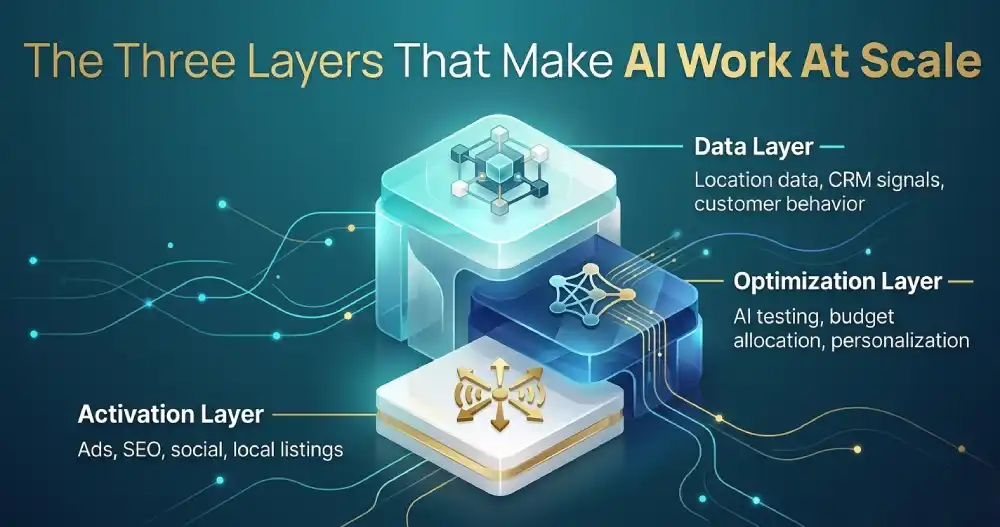
Successful AI lead generation systems rely on three connected layers that work together.
1. Data Layer
The data layer includes:
- CRM data
- Customer behavior insights
- Local business information
- Conversion tracking
- Website analytics
Clean, centralized data is the foundation of every effective AI system. If the data is inconsistent, the results will also be inconsistent.
2. Activation Layer
The activation layer includes customer acquisition channels such as:
- Google Ads
- SEO
- Social media marketing
- Local listings
- Email campaigns
AI helps businesses manage these channels from a unified strategy while adapting campaigns to local market behavior.
3. Optimization Layer
This layer is where AI continuously improves performance through:
- Automated testing
- Budget allocation
- Lead scoring
- Audience targeting
- Personalized messaging
The system becomes smarter over time by learning from customer interactions across all locations.
AI and Local Search: Winning High-Intent Customers
Local search has become one of the most important sources of high-converting traffic for multi-location businesses.
Consumers frequently search for services using phrases like:
- “near me”
- “best local service”
- “top-rated nearby businesses”
These searches often indicate strong purchase intent.
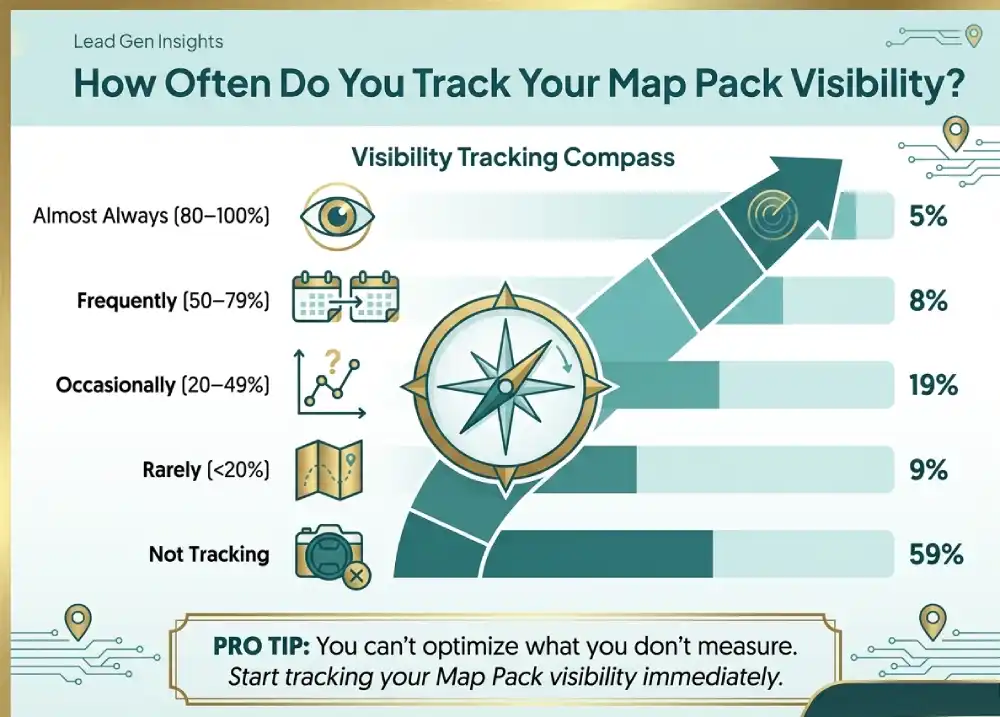
Common Local SEO Problems
Many businesses lose valuable traffic because of:
- Inconsistent Google Business Profiles
- Incorrect contact information
- Weak local SEO signals
- Poor review management
- Missing location pages
Even small inconsistencies can reduce visibility in local search results.
How AI Improves Local Search Performance
AI tools can automate and improve local SEO by:
- Synchronizing business listings
- Monitoring reviews
- Generating localized content
- Updating business information automatically
- Improving map visibility
AI also helps businesses create unique content for each location without requiring large content teams.
Scaling Paid Advertising With AI
Managing advertising campaigns across dozens or hundreds of locations manually is expensive and inefficient.
AI-powered advertising platforms solve this problem by automating optimization.
Dynamic Budget Allocation
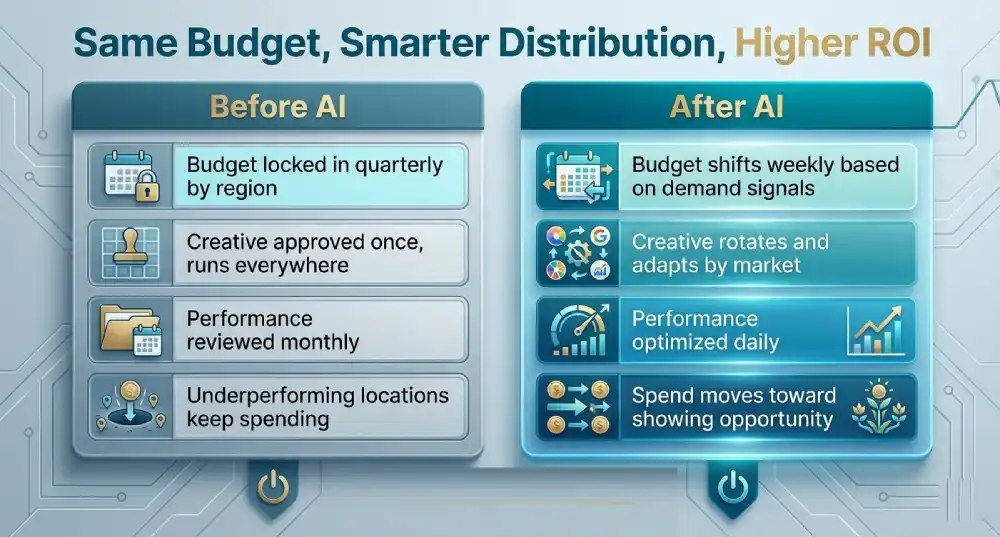
AI can automatically shift advertising budgets toward locations producing the highest-quality leads instead of distributing spend evenly across all markets.
This improves efficiency and reduces wasted ad spend.
Smart Creative Testing
AI continuously tests:
- Headlines
- Images
- Calls-to-action
- Ad copy
- Landing pages
Winning combinations are prioritized automatically based on local performance.
Cross-Platform Optimization
Modern AI advertising systems optimize campaigns across:
- Google Search
- YouTube
- Display ads
- Maps
- Social platforms
This creates a more connected customer acquisition strategy.
Why Personalized Marketing Matters Across Locations
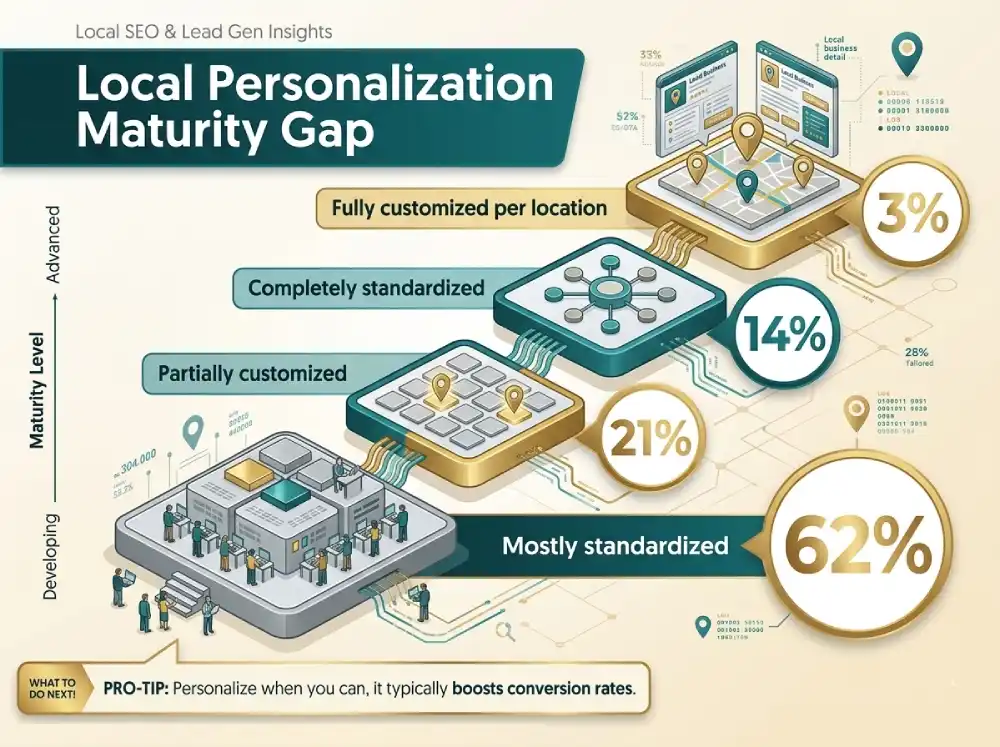
Customers in different cities and regions behave differently.
A marketing message that works in one location may fail completely in another.
AI-Powered Personalization
AI helps businesses personalize marketing through:
- Location-specific offers
- Behavioral targeting
- Dynamic messaging
- Localized ad creatives
- Region-based landing pages
This increases customer relevance and improves conversion rates.
Better Customer Experiences
AI-driven personalization allows businesses to deliver experiences that feel tailored to local audiences while maintaining consistent brand identity.
This balance between central control and local relevance is critical for scalable growth.
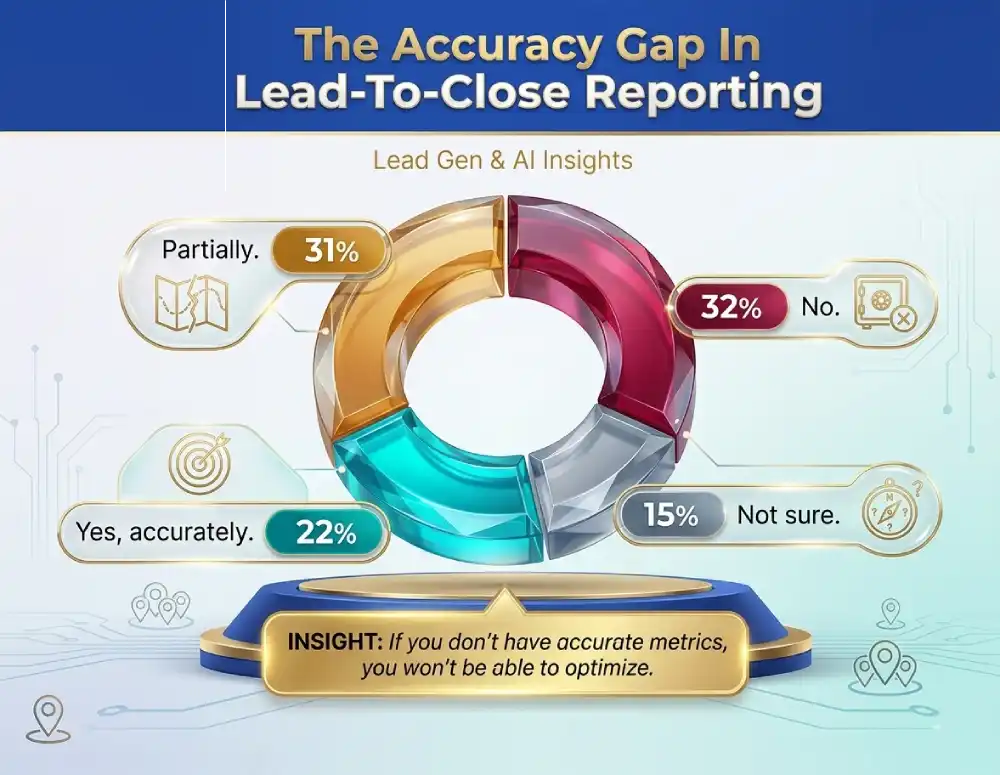
Lead Quality Matters More Than Lead Volume
One of the biggest mistakes businesses make is focusing only on the number of leads generated.
Revenue growth depends on lead quality, not just quantity.
Important Metrics to Track
Businesses should prioritize:
- Lead-to-close rate
- Cost per qualified lead
- Revenue contribution by location
- Conversion rate by market
- Customer lifetime value
These metrics reveal which campaigns actually produce revenue.
AI Lead Scoring
AI systems can evaluate customer intent and prioritize leads based on:
- Purchase behavior
- Website interactions
- Engagement history
- Demographic signals
- Location data
This allows sales teams to focus on the highest-value opportunities first.
30-Day AI Lead Generation Implementation Plan
Businesses do not need a massive operational overhaul to begin seeing results from AI-powered lead generation. A structured 30-day rollout can quickly improve lead quality, increase conversions, and create a scalable marketing framework for long-term growth.
Week 1: Review Data and Identify High-Performing Locations
Start by gathering all location-level marketing and sales data into one centralized dashboard. Review important performance metrics such as:
- Lead volume
- Conversion rates
- Advertising performance
- Customer inquiries
- Revenue contribution by location
Check every business listing for outdated or inconsistent information, especially business name, address, and phone number details. Inaccurate local listings can reduce search visibility and hurt customer trust.
Next, compare your strongest-performing locations with your weakest ones. Identify the top-performing 10 percent of locations and the bottom-performing 10 percent. The differences between them often reveal major growth opportunities.
You should also review your Google Business Profiles carefully. Look for:
- Missing photos
- Incomplete profiles
- Outdated business hours
- Unanswered customer reviews
- Low review activity
Create a priority list of locations needing immediate optimization during Week 2.
Week 2: Launch AI Campaigns and Improve Local Listings
Once your data audit is complete, begin launching AI-powered advertising campaigns focused on your highest-opportunity markets first.
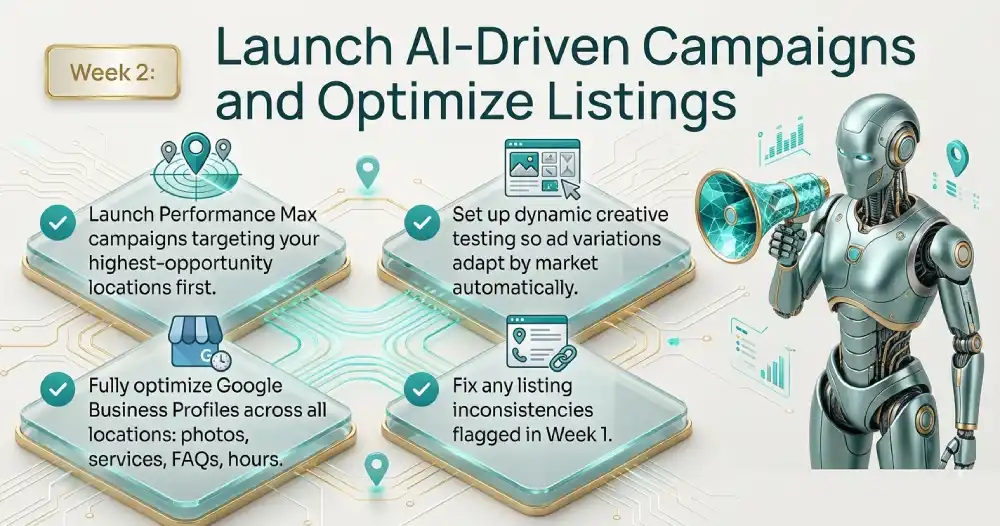
At the same time, fully optimize every Google Business Profile by updating:
- Photos
- Services
- FAQs
- Contact information
- Opening hours
- Business descriptions
Use AI-driven ad platforms to automate campaign testing and improve targeting based on local customer behavior.
Dynamic creative optimization can automatically test different:
- Headlines
- Images
- Ad copy
- Calls-to-action
This helps campaigns adapt to individual market conditions without requiring manual adjustments for every location.
Any listing issues discovered during Week 1 should also be corrected immediately to improve local search visibility.
Week 3: Add Personalization and AI Lead Scoring
In the third week, focus on improving lead quality and customer engagement through personalization.
Create location-specific messaging for your most important landing pages so customers see content relevant to their region and needs.
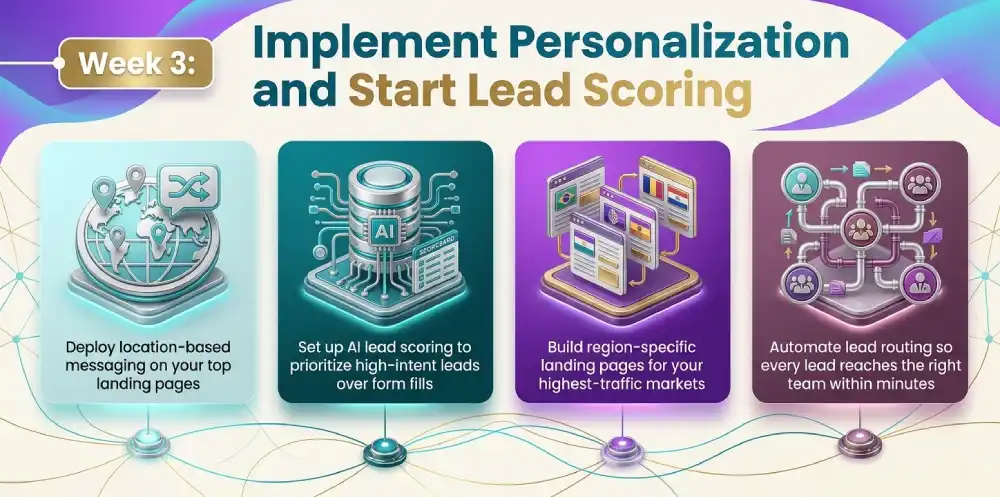
Implement AI lead scoring systems that rank leads based on purchase intent, engagement behavior, and conversion likelihood. This allows sales teams to prioritize the highest-value opportunities instead of treating every inquiry equally.
You should also:
- Build regional landing pages
- Personalize customer follow-ups
- Automate lead routing
- Improve response times
AI automation can ensure every incoming lead is assigned to the correct team or location within minutes, improving both customer experience and conversion rates.
Week 4: Measure Results and Reallocate Budget
During the final week, evaluate performance improvements compared to your starting baseline.
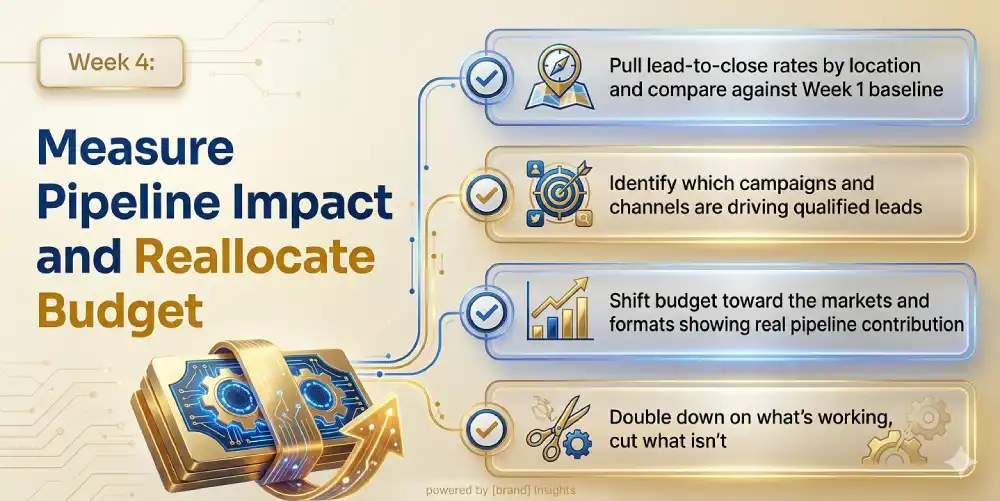
Analyze important metrics including:
- Lead-to-close rate
- Cost per qualified lead
- Conversion rates by location
- Campaign ROI
- Revenue contribution
Identify which advertising channels, campaigns, and locations are producing the highest-quality leads and strongest pipeline growth.
Reallocate budgets toward top-performing markets and pause campaigns that are underperforming. AI systems become more effective over time as they gather additional customer and performance data.
Build Long-Term Growth Through Continuous Optimization
Small AI improvements can create significant long-term gains when applied consistently. The goal of this 30-day rollout is not to perfect every system immediately. Instead, it is to establish a scalable feedback loop that continuously improves marketing performance, customer targeting, and lead quality over time.
Businesses looking to expand further can later introduce advanced automation tools for lead nurturing, customer retention, and personalized communication workflows.
The Future of AI-Powered Lead Generation
AI-powered lead generation is no longer optional for large multi-location businesses competing in crowded markets.
Companies that continue relying on disconnected manual systems risk losing visibility, wasting advertising budgets, and missing high-intent customers.
Businesses that adopt AI strategically can scale faster, improve lead quality, personalize customer experiences, and make smarter marketing decisions in real time.
The future of scalable customer acquisition belongs to businesses that combine centralized strategy with AI-driven local execution.
AI-powered lead generation, AI lead generation for franchises, multi-location lead generation, AI marketing automation, local SEO for franchises, AI for local business marketing, scalable lead generation systems, AI paid advertising optimization, lead generation for global companies, AI customer acquisition,
FAQ
What is AI-powered lead generation?
AI-powered lead generation uses artificial intelligence to automate customer acquisition, optimize marketing campaigns, improve targeting, and increase lead quality.
Why is AI important for multi-location businesses?
AI helps businesses manage marketing, local SEO, paid ads, and customer engagement across many locations efficiently and consistently.
Can AI improve local SEO?
Yes. AI can optimize business listings, generate localized content, monitor reviews, and improve visibility in local search results.
How does AI improve lead quality?
AI analyzes customer behavior and intent signals to identify leads that are more likely to convert into paying customers.
Is AI lead generation expensive?
Costs vary, but many businesses reduce wasted advertising spend and improve ROI after implementing AI-driven systems.
What industries benefit most from AI lead generation?
Franchises, healthcare groups, real estate companies, retail chains, home services, automotive businesses, and global enterprises often benefit significantly.
Conclusion
AI-powered lead generation is redefining how multi-location businesses compete in today’s digital marketplace. From improving local SEO and automating paid advertising to personalizing customer experiences and optimizing lead quality, AI gives brands the ability to scale smarter and faster across every market they serve.
Traditional lead generation methods can no longer keep up with the complexity of managing multiple locations, changing customer behavior, and rising competition. Businesses that continue relying on disconnected systems and manual processes risk losing valuable opportunities and wasting marketing budgets.
By combining centralized strategy with AI-driven automation and localized execution, companies can create a more efficient, data-driven growth engine. The result is stronger customer engagement, better conversion rates, improved ROI, and sustainable long-term growth.
As AI technology continues to evolve, businesses that adopt these systems early will gain a significant competitive advantage. Whether you operate a franchise, enterprise brand, or global company, investing in AI-powered lead generation is becoming essential for staying visible, competitive, and profitable in the future of digital marketing.
Related Articles