Key Takeaways
- How to Find the Right Keywords for WebsiteFinding the right keywords is one of the most important steps in building a successful website.
- Keywords help search engines understand your content and connect it with users who are searching for relevant information.
- Choosing the wrong keywords can result in low traffic, while the right ones can significantly boost your visibility.
- Keywords are the words or phrases people type into search engines when looking for information.
- For example:“best SEO tools”“how to lose weight”“cheap laptops under 500”These phrases represent user intent, and your goal is to match that intent with your content.
- Why Keyword Research MattersKeyword research helps you:Understand your audience’s search behaviorDiscover topics people are interested inImprove your search engine rankingsDrive targeted traffic to your websiteWithout proper keyword research, your content may never reach the right audience.
How to Find the Right Keywords for Website
Finding the right keywords is one of the most important steps in building a successful website. Keywords help search engines understand your content and connect it with users who are searching for relevant information. Choosing the wrong keywords can result in low traffic, while the right ones can significantly boost your visibility.
What Are Keywords?
Keywords are the words or phrases people type into search engines when looking for information. For example:
- “best SEO tools”
- “how to lose weight”
- “cheap laptops under 500”
These phrases represent user intent, and your goal is to match that intent with your content.
Why Keyword Research Matters
Keyword research helps you:
- Understand your audience’s search behavior
- Discover topics people are interested in
- Improve your search engine rankings
- Drive targeted traffic to your website
Without proper keyword research, your content may never reach the right audience.
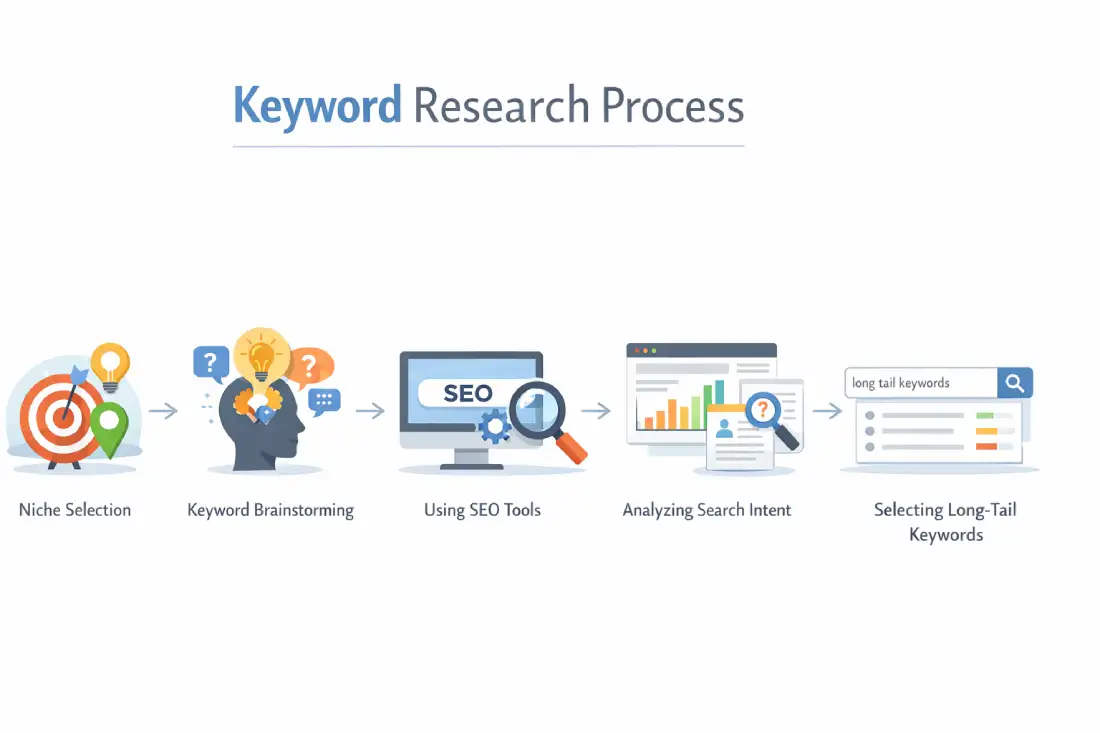
Step-by-Step Guide to Finding the Right Keywords
1. Understand Your Niche
Start by identifying your website’s main topic. Ask yourself:
- What is my website about?
- Who is my target audience?
- What problems am I solving?
Example:
If your website is about fitness, your niche keywords could include:
- home workout
- weight loss tips
- muscle building
2. Brainstorm Seed Keywords
Seed keywords are basic terms related to your niche.
Example:
For a digital marketing website:
- SEO
- content marketing
- social media
These will help you generate more keyword ideas.
3. Use Keyword Research Tools
Use tools to expand your keyword list and find data like search volume and competition.
Popular tools include:
- Google Keyword Planner
- Ubersuggest
- Ahrefs
- SEMrush
Look for:
- High search volume
- Low to medium competition
- Clear user intent
4. Analyze Search Intent
Understanding why users search for a keyword is crucial.
There are 4 types of search intent:
- Informational: “how to do SEO”
- Navigational: “YouTube login”
- Transactional: “buy SEO tools”
- Commercial: “best SEO tools review”
Example:
Keyword: “best laptops under 500”
→ Commercial intent (user wants to compare before buying)
5. Focus on Long-Tail Keywords
Long-tail keywords are longer and more specific phrases.
Example:
- Short keyword: “SEO tools”
- Long-tail keyword: “best free SEO tools for beginners”
Benefits:
- Lower competition
- Higher conversion rate
- More targeted traffic
6. Check Keyword Difficulty
Keyword difficulty shows how hard it is to rank for a keyword.
- High difficulty → Hard to rank
- Low difficulty → Easier to rank
Tip:
Start with low-competition keywords if your website is new.
7. Analyze Competitors
Look at websites ranking for your target keywords.
Check:
- Which keywords they use
- Their content structure
- Backlinks
This helps you find opportunities to improve and outrank them.
8. Use Keywords Naturally
Once you have your keywords, use them naturally in:
- Title
- Headings (H1, H2, H3)
- Meta description
- URL
- Content body
Avoid keyword stuffing. Focus on readability and user experience.
Example of Keyword Research
Let’s say you run a blog about blogging tips.
Seed keyword: blogging
Expanded keywords:
- how to start a blog
- blogging tips for beginners
- how to make money blogging
Best choice (long-tail):
- “how to start a blog and make money”
This keyword has:
- Clear intent
- Specific audience
- Higher chances of ranking
Common Mistakes to Avoid
- Choosing only high-volume keywords
- Ignoring user intent
- Not using long-tail keywords
- Keyword stuffing
- Skipping competitor analysis
keyword research, SEO keywords, find keywords for website, keyword research guide, long tail keywords, SEO strategy, keyword tools, search intent, SEO tips, website SEO
Conclusion
Finding the right keywords is the foundation of SEO success. By understanding your audience, using the right tools, and focusing on search intent, you can discover keywords that drive real traffic and growth.
Take your time with keyword research—it’s not just about ranking, but about connecting with the right audience.
Related Articles