Key Takeaways
- Search intent is one of the most important concepts in SEO.
- Even if you choose the right keywords, your content won’t rank well unless it matches what users are actually looking for.
- Understanding and matching search intent helps you create content that satisfies users—and that’s exactly what search engines like Google want.
- Search intent (also called user intent) is the reason behind a user’s search query.
- In simple terms:👉 Why is someone searching for this keyword?
- Example:“how to lose weight” → user wants information“buy protein powder online” → user wants to purchase“best smartphones 2026” → user wants comparisonWhy Search Intent Matters in SEOMatching search intent helps you:Rank higher on search enginesReduce bounce rateIncrease engagementImprove conversionsIf your content doesn’t match intent, users will leave your page quickly—and your rankings will drop.
Search intent is one of the most important concepts in SEO. Even if you choose the right keywords, your content won’t rank well unless it matches what users are actually looking for.
Understanding and matching search intent helps you create content that satisfies users—and that’s exactly what search engines like Google want.
What Is Search Intent?
Search intent (also called user intent) is the reason behind a user’s search query.
In simple terms:
👉 Why is someone searching for this keyword?
Example:
- “how to lose weight” → user wants information
- “buy protein powder online” → user wants to purchase
- “best smartphones 2026” → user wants comparison
Why Search Intent Matters in SEO
Matching search intent helps you:
- Rank higher on search engines
- Reduce bounce rate
- Increase engagement
- Improve conversions
If your content doesn’t match intent, users will leave your page quickly—and your rankings will drop.
Types of Search Intent
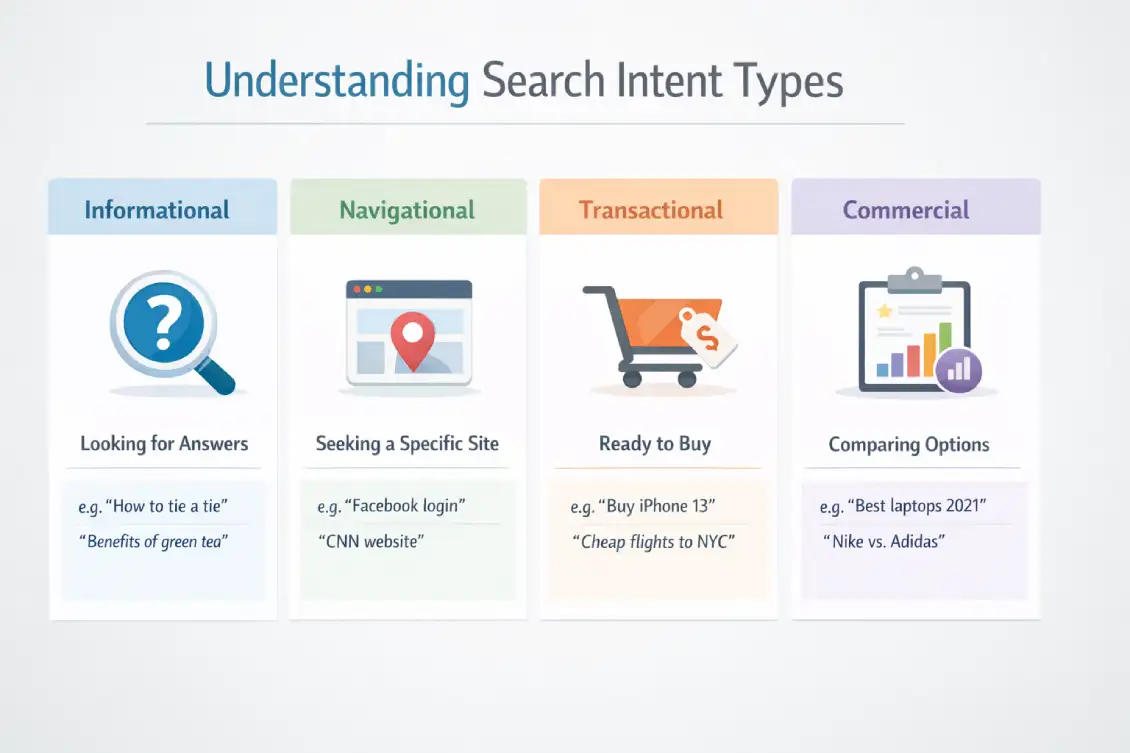
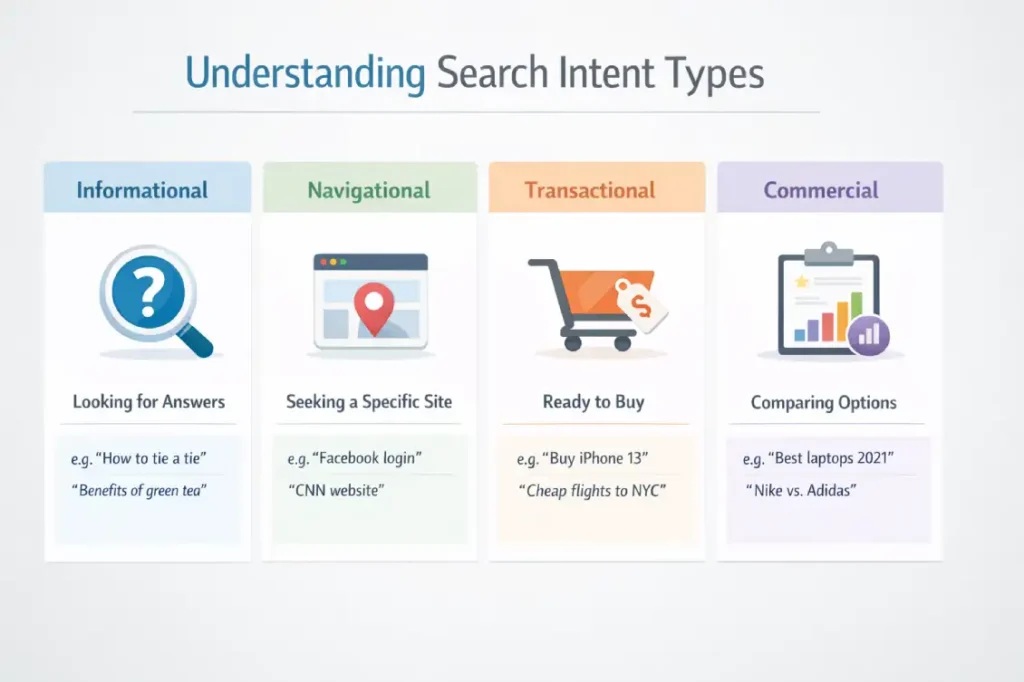
There are four main types of search intent:
1. Informational Intent
The user wants to learn something.
Examples:
- “what is SEO”
- “how to start a blog”
Best Content Format:
- Guides
- Tutorials
- Blog posts
2. Navigational Intent
The user wants to go to a specific website.
Examples:
- “Facebook login”
- “YouTube homepage”
Best Content Format:
- Landing pages
- Brand pages
3. Transactional Intent
The user is ready to take action (buy or sign up).
Examples:
- “buy laptop online”
- “subscribe SEO tools”
Best Content Format:
- Product pages
- Sales pages
4. Commercial Investigation
The user is comparing options before making a decision.
Examples:
- “best SEO tools”
- “iPhone vs Samsung”
Best Content Format:
- Reviews
- Comparison articles
- Listicles
How to Identify Search Intent
1. Analyze the Keyword
Look at the wording of the keyword.
Examples:
- “how to” → informational
- “buy” → transactional
- “best” → commercial
2. Check Google Search Results (SERP)
Search your keyword on Google and analyze the top results.
Look for:
- Type of content (blogs, videos, product pages)
- Format (list, guide, review)
- Content depth
Tip:
Google already shows what type of content matches the intent.
3. Look at Featured Snippets
Featured snippets give clues about intent.
Examples:
- Paragraph → informational
- List → step-by-step guide
- Table → comparison
How to Match Search Intent
1. Choose the Right Content Type
Match your content with what users expect.
Example:
Keyword: “best laptops under 500”
✔ Create: Comparison article
❌ Avoid: General blog post
2. Use the Right Format
Structure your content properly.
Examples:
- Informational → Step-by-step guide
- Commercial → List with pros & cons
- Transactional → Product page
3. Answer the User’s Question Clearly
Your content should quickly solve the user’s problem.
- Use simple language
- Provide direct answers
- Avoid unnecessary fluff
4. Optimize Content for SEO
Include your keyword in:
- Title
- Headings
- Meta description
- First paragraph
Also use related keywords naturally.
5. Improve Content Depth
Cover the topic completely.
Include:
- Examples
- FAQs
- Images
- Case studies
This increases your chances of ranking higher.
Example of Matching Search Intent
Keyword: “how to start a blog”
Search Intent: Informational
Good Content:
- Step-by-step guide
- Beginner-friendly explanation
- Includes tools and tips
Bad Content:
- Only selling hosting services
- No clear instructions
Common Mistakes to Avoid
- Ignoring search intent
- Targeting the wrong content type
- Writing overly promotional content for informational queries
- Not analyzing SERP results
- Providing incomplete answers
search intent, user intent SEO, types of search intent, informational intent, transactional keywords, SEO strategy, keyword intent, SERP analysis, SEO content optimization, search intent guide
Conclusion
Search intent is the foundation of successful SEO. By understanding what users want and creating content that matches their needs, you can improve rankings, engagement, and conversions.
Always remember:
👉 Don’t just target keywords—target user intent.
Related Articles