Key Takeaways
- Ranking for low competition keywords is one of the smartest SEO strategies, especially for new websites.
- Instead of competing with large, established websites, you target easier keywords that can quickly bring traffic and improve your rankings.
- Low competition keywords are search terms that have:Fewer websites targeting themLower keyword difficultyHigher chances of ranking on the first pageExample:High competition: “SEO tools”Low competition: “best free SEO tools for small businesses”Why Target Low Competition Keywords?
- Focusing on low competition keywords helps you:Rank faster on search enginesDrive targeted trafficBuild domain authorityCompete with bigger websitesThis strategy is especially useful for beginners and small websites.
- low competition keywords, rank keywords fast, SEO strategy, long tail keywords, keyword difficulty, SEO tips, keyword ranking guide, beginner SEO, website traffic, search engine rankingStep-by-Step Guide to Rank for Low Competition Keywords1.
- Find Low Competition KeywordsStart with proper keyword research.
Ranking for low competition keywords is one of the smartest SEO strategies, especially for new websites. Instead of competing with large, established websites, you target easier keywords that can quickly bring traffic and improve your rankings.
What Are Low Competition Keywords?
Low competition keywords are search terms that have:
- Fewer websites targeting them
- Lower keyword difficulty
- Higher chances of ranking on the first page
Example:
- High competition: “SEO tools”
- Low competition: “best free SEO tools for small businesses”
Why Target Low Competition Keywords?
Focusing on low competition keywords helps you:
- Rank faster on search engines
- Drive targeted traffic
- Build domain authority
- Compete with bigger websites
This strategy is especially useful for beginners and small websites.
Step-by-Step Guide to Rank for Low Competition Keywords
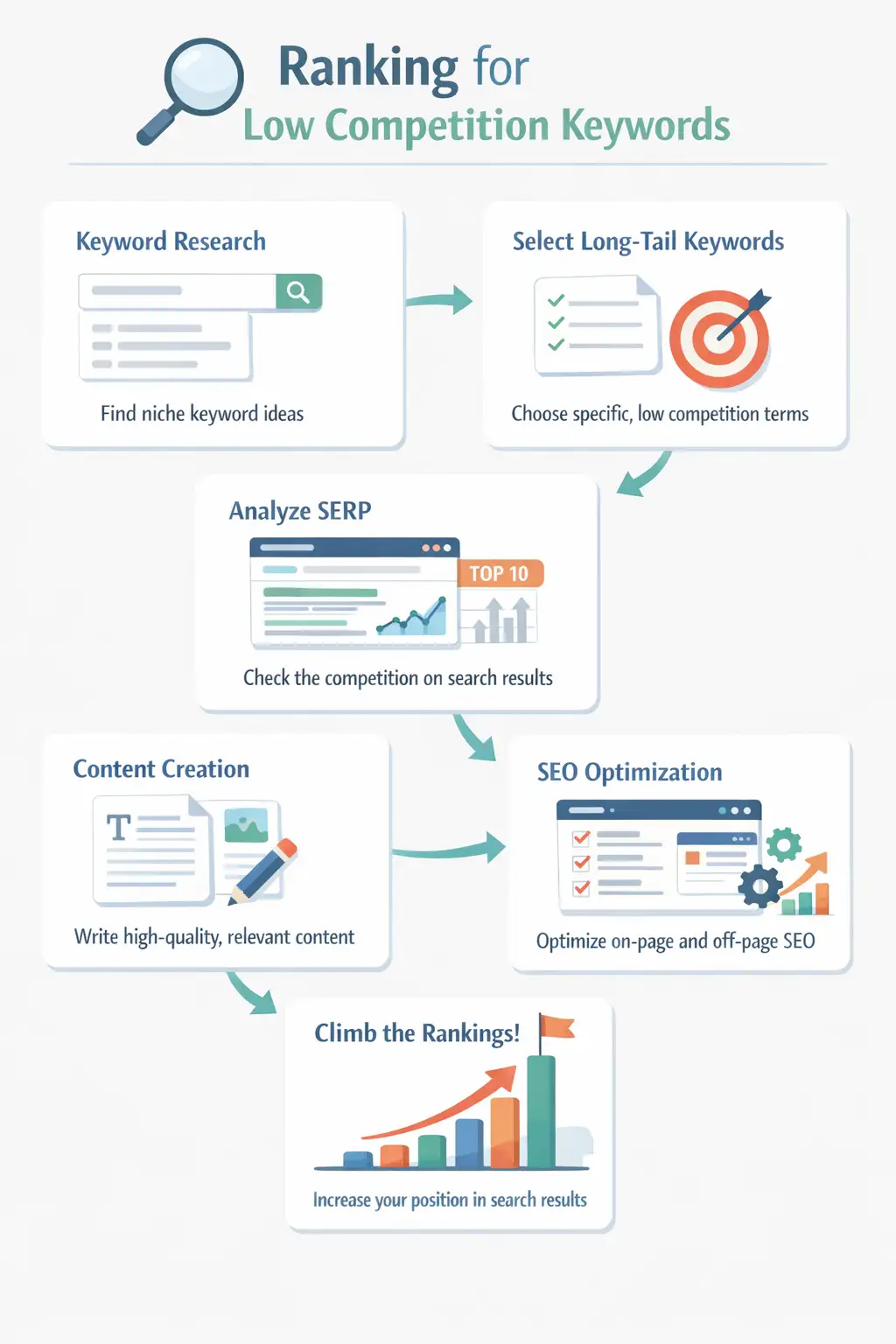
1. Find Low Competition Keywords
Start with proper keyword research.
Look for:
- Low keyword difficulty (KD)
- Moderate search volume
- Clear user intent
Example:
Instead of targeting “weight loss,” go for:
- “weight loss tips for beginners at home”
2. Focus on Long-Tail Keywords
Long-tail keywords are your best opportunity.
Example:
- Short keyword: “laptops”
- Long-tail keyword: “best laptops under 500 for students”
These keywords are:
- Easier to rank
- More specific
- Higher converting
3. Analyze the Search Results (SERP)
Before targeting a keyword, check the top 10 results on Google.
Look for:
- Weak or outdated content
- Low-quality websites
- Forums or Q&A pages ranking
Tip:
If you see small blogs ranking, it’s a good sign you can rank too.
4. Create High-Quality Content
Content is the key to ranking.
Make sure your content is:
- Helpful and informative
- Well-structured (H1, H2, H3)
- Easy to read
- More detailed than competitors
Example Structure:
- Introduction
- Step-by-step guide
- Examples
- FAQs
5. Optimize On-Page SEO
Use your keyword naturally in:
- Title
- URL
- Meta description
- Headings
- First 100 words
- Image alt text
Important:
Avoid keyword stuffing. Focus on natural placement.
6. Use Internal Linking
Link your content to other relevant pages on your website.
Benefits:
- Improves SEO
- Helps search engines crawl your site
- Keeps users engaged longer
7. Build Basic Backlinks
Even for low competition keywords, backlinks help.
Simple ways:
- Guest posting
- Blog commenting
- Directory submissions
- Social sharing
8. Improve User Experience (UX)
Google ranks pages that users love.
Focus on:
- Fast loading speed
- Mobile-friendly design
- Clean layout
- Easy navigation
Example Strategy
Let’s say you have a tech blog.
Step 1: Find keyword
“best free video editing software for beginners”
Step 2: Analyze SERP
You find weak blog posts ranking.
Step 3: Create better content
- Add comparison table
- Include pros and cons
- Add screenshots
Result:
Higher chance of ranking on page 1.
Common Mistakes to Avoid
- Targeting only high competition keywords
- Ignoring search intent
- Writing thin content
- Not optimizing SEO properly
- Expecting instant results
low competition keywords, rank keywords fast, SEO strategy, long tail keywords, keyword difficulty, SEO tips, keyword ranking guide, beginner SEO, website traffic, search engine ranking
Conclusion
Ranking for low competition keywords is the fastest way to grow your website traffic. By focusing on the right keywords, creating valuable content, and optimizing your SEO, you can achieve higher rankings even with a new website.
Consistency and quality are the keys to long-term success.
Related Articles